
Gold has fascinated human beings for thousands of years. Its brilliance, rarity, and resistance to corrosion made it a symbol of wealth, power, eternity, and divine light across many cultures.
In art, gold is often used not as a solid material but as gold leaf: sheets of metal beaten until they become extraordinarily thin. These delicate sheets can be applied to wood, stone, plaster, metal, glass, and many other prepared surfaces.
The use of gold leaf is both decorative and symbolic. It can transform an ordinary surface into something luminous, guide attention toward important details, and create an atmosphere that changes according to the light.
Gold leaf has appeared in ancient Egyptian objects, Roman decoration, Byzantine mosaics, medieval manuscripts, religious icons, Renaissance altarpieces, furniture, architecture, and contemporary sculpture. Although the techniques have evolved, the essential appeal of gold remains the same.
Unlike ordinary paint, gold leaf reflects light rather than simply absorbing and displaying color. This means its appearance changes continuously. A gilded surface may glow brightly from one angle and become darker or more subtle from another.
The viewer's movement therefore becomes part of the artwork. As they walk past the piece, different areas become visible. The gold seems to flicker, creating an impression of movement within a still object.
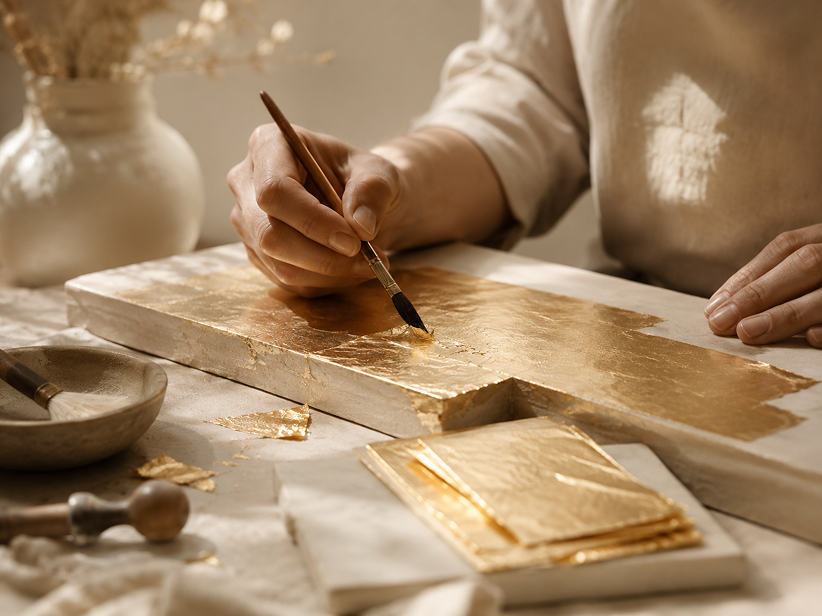
The process of applying gold leaf is known as gilding. It requires patience, preparation, and precise control. The surface must first be cleaned and made smooth. Any imperfection beneath the gold may remain visible once the leaf is applied.
When gilding wood, the artist or craftsperson may begin with several preparatory layers. The wood can be sealed to prevent it from absorbing moisture. A smooth ground, traditionally made from materials such as gesso, may then be added.
For certain traditional methods, a layer of bole is applied over the ground. Bole is a fine clay that can be red, yellow, or another warm tone. It supports the gold and influences its final appearance.
Red bole is especially common because its warmth enriches the color of the gold. If tiny gaps or worn areas appear, the red beneath them creates depth rather than a harsh contrast.
There are several gilding techniques, but two of the best known are water gilding and oil gilding. Water gilding is often used for fine interior objects, frames, icons, and highly polished surfaces.
In this process, the prepared surface is lightly activated with moisture before the gold leaf is applied. Once dry, the gold can be burnished with a smooth stone, often agate, until it develops a mirror-like shine.
Oil gilding uses a special adhesive known as size. The size is applied to the surface and allowed to become tacky. The gold leaf is then carefully placed over it.
This method is often more durable and can be used on architectural details, exterior elements, or surfaces that are difficult to burnish. However, it usually produces a softer appearance than highly polished water gilding.
Handling gold leaf is one of the most demanding parts of the process. Each sheet is so thin that it can move with the slightest breath or air current. It may fold, tear, or attach itself to an unintended surface.
The artist often uses specialized tools, including a gilding cushion, a fine knife, and a soft brush known as a gilder's tip. The leaf is cut into the required shape and lifted gently onto the prepared area.
When applied to a carved relief, the process becomes even more complex. The gold must follow raised details, deep curves, narrow lines, folds, and textured surfaces. The artist must ensure that the leaf reaches each area without losing the definition of the carving.
Sometimes gold is applied across a broad surface. In other works, it is used selectively to emphasize particular details. This selective gilding can be especially powerful.
Against dark or reddish wood, gold creates a dramatic contrast. It can highlight a central figure, decorative curtain, architectural column, inscription, or symbolic object. The eye naturally follows the reflective areas, allowing the artist to guide the viewer through the composition.
In religious art, gold often represents a reality beyond the ordinary world. Byzantine icons used golden backgrounds not to show a physical environment but to suggest a timeless, sacred space.
Medieval manuscripts surrounded holy figures and important scenes with gold to communicate spiritual importance. Altarpieces used gilded surfaces that came alive in candlelight, creating an atmosphere of mystery and devotion.
In contemporary work, gold leaf can retain these historic associations while taking on new meanings. It may suggest memory, transformation, preservation, luxury, fragility, or even the tension between spiritual and material value.
Gold is precious, but gold leaf is also extremely fragile. This contrast gives it emotional complexity. A gilded surface may appear powerful and permanent, yet it can be damaged by touch, moisture, abrasion, or incorrect cleaning.
The preservation of gilded artworks therefore requires care. Dust should not be removed aggressively, and damaged areas should be treated by trained conservators. The goal is not always to make the gold look completely new but to respect the history and character of the object.
Signs of age can add depth to a gilded surface. Slight wear may reveal the bole beneath, while small variations remind us that the work was made by hand. These imperfections can become part of the artwork's beauty.
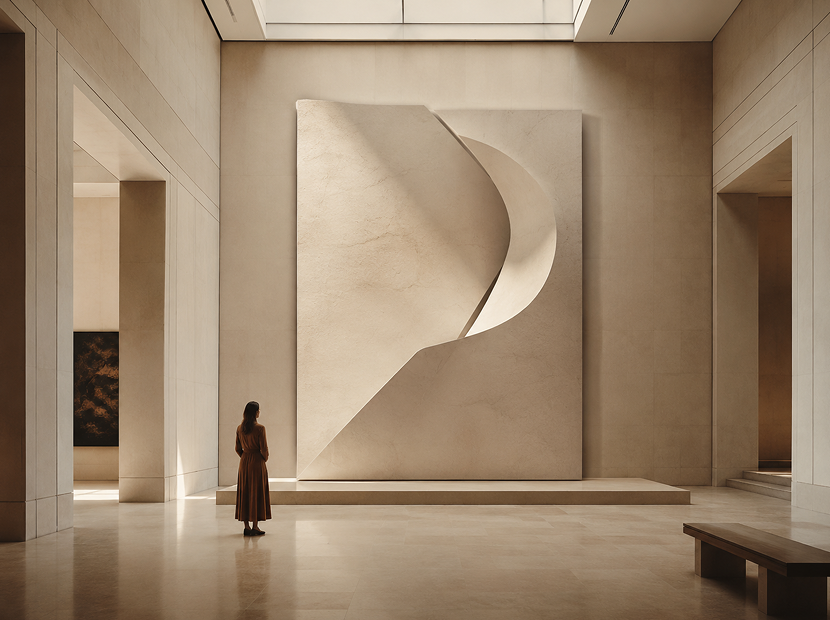
Gold leaf also interacts strongly with its surroundings. Warm museum lighting may make it glow softly, while direct light can create sharper reflections. The background color, wall tone, and distance from the viewer all affect how it is perceived.
For this reason, the presentation of a gilded work should be considered carefully. Light should reveal the reflective qualities without overwhelming the details. The surrounding space should allow the gold to stand out while maintaining harmony with the other materials.
The art of gold leaf lies in the balance between technical discipline and visual magic. The process is slow, delicate, and unforgiving, yet the final result can appear effortless.
Once applied, the gold seems to carry its own light. It brings depth to carved surfaces, emphasizes meaningful details, and connects contemporary artworks with centuries of artistic tradition.
Gold leaf is more than ornament. It is a material that transforms the relationship between the artwork, the environment, and the viewer. As light moves across its surface, the work changes before our eyes, reminding us that beauty can be both radiant and delicate.