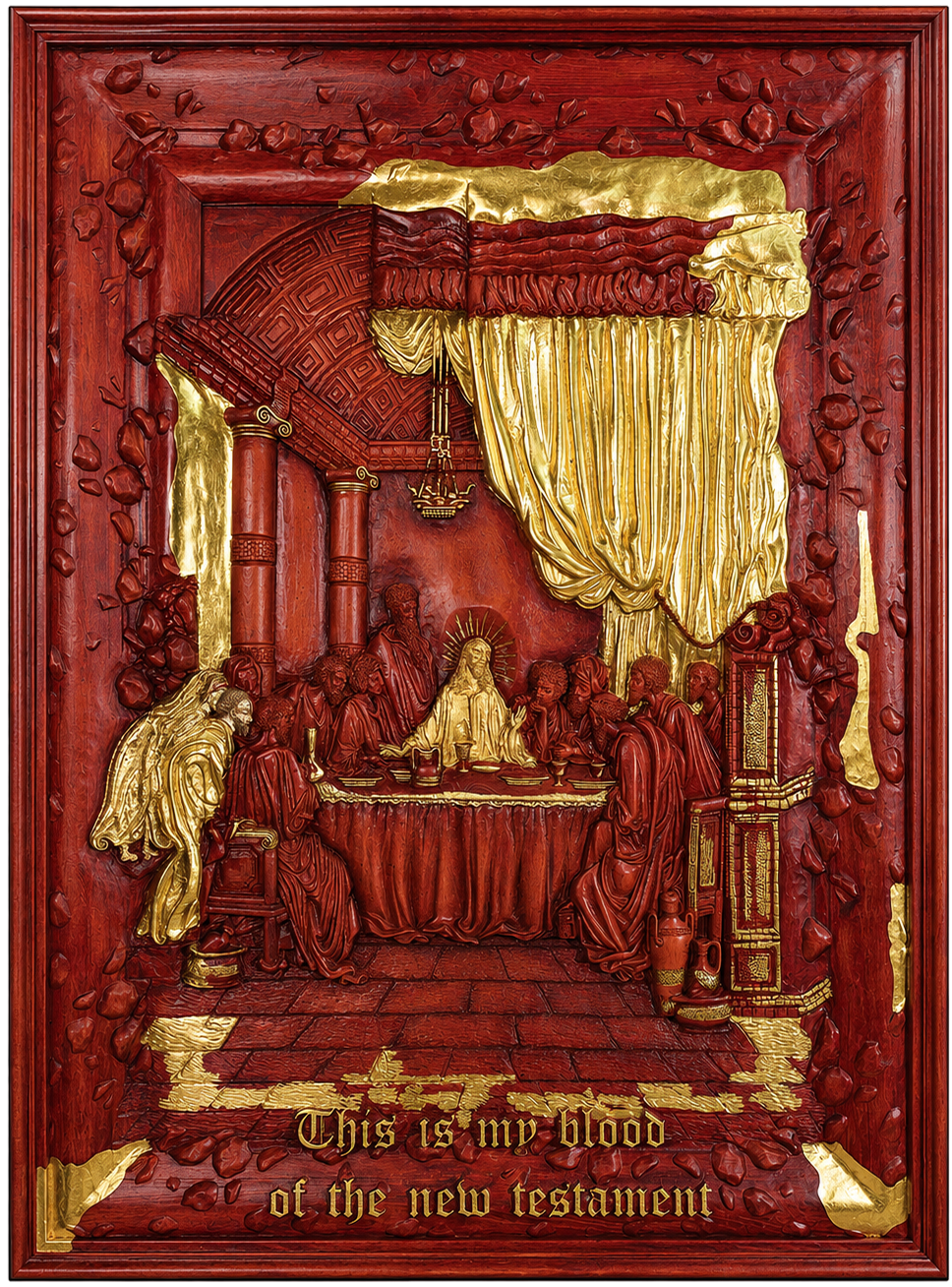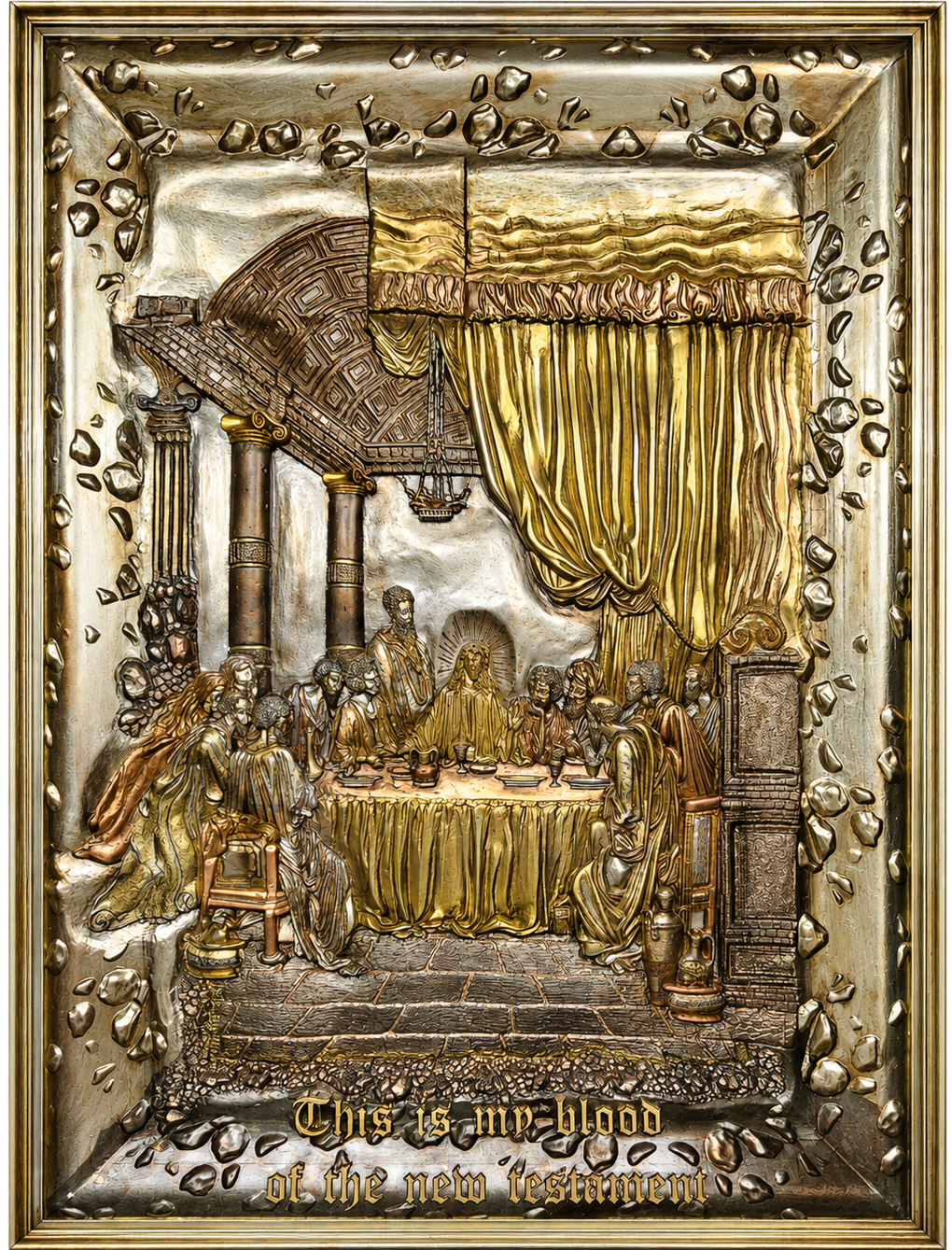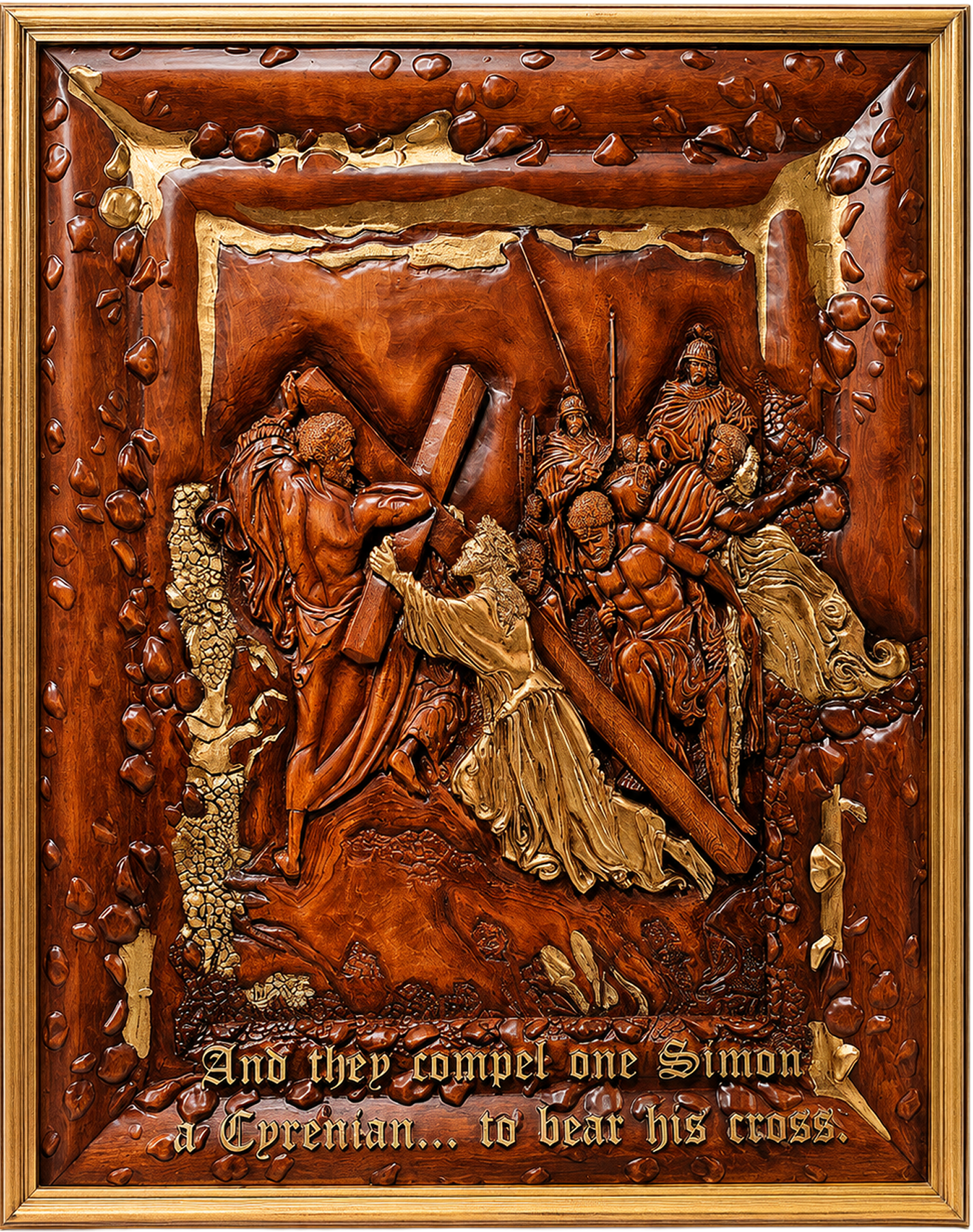
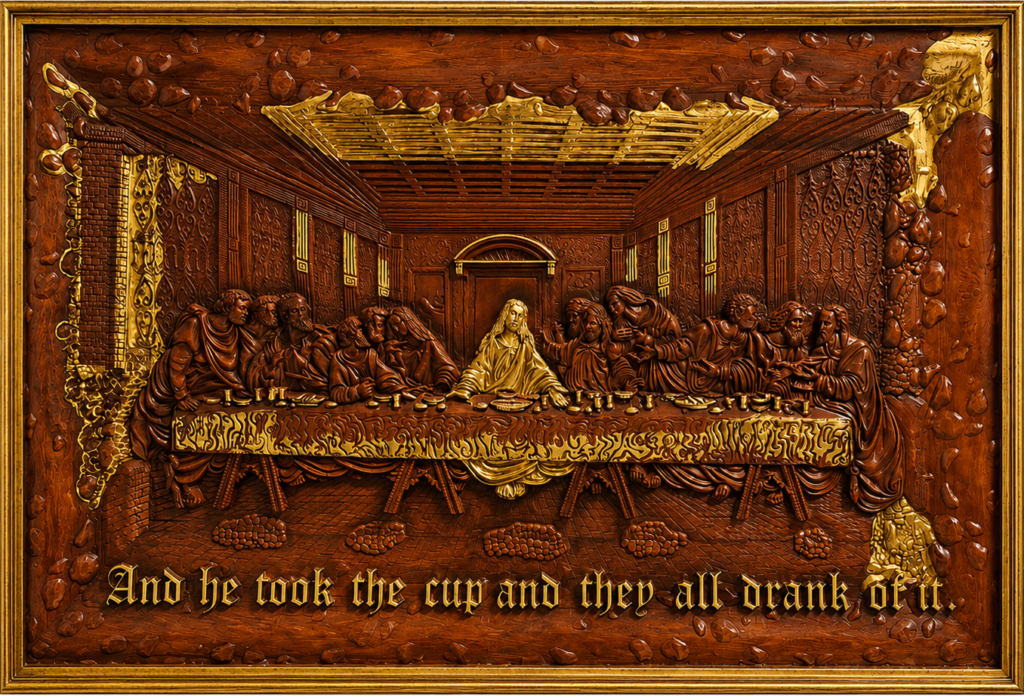
Few compositions in the history of Western art carry the cultural and spiritual weight of Leonardo da Vinci’s Last Supper. Amnon’s interpretation enters this iconic scene not as imitation but as expansion — recreating the moment’s emotional intensity at a scale that transforms what was a devotional painting into an object of physical encounter. Carved from solid wood and selectively coated with 24 Karat gold leaf, the work draws the eye to the central figure while allowing the surrounding apostles to emerge and recede in a play of light and material. To stand before it is to understand why this scene has compelled artists for centuries.
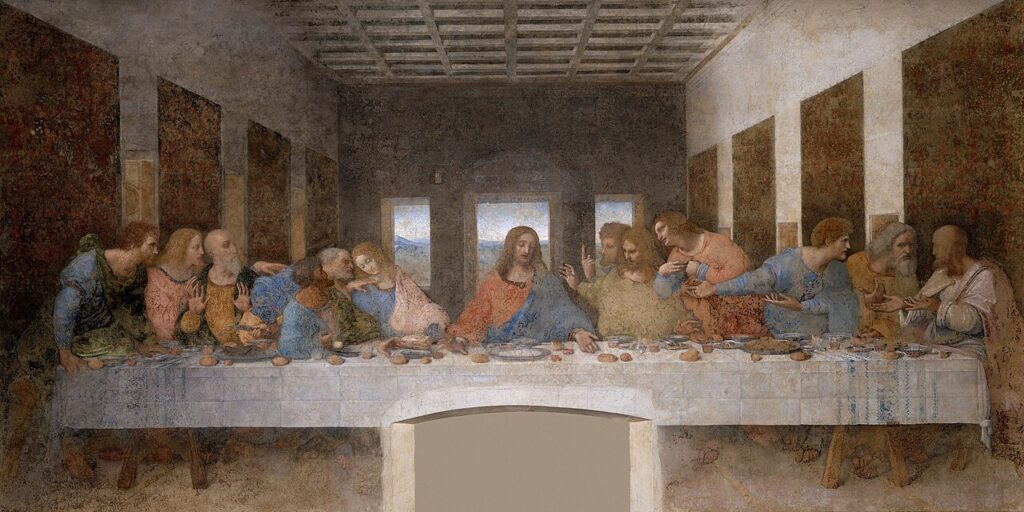
The Last Supper. Leonardo da Vinci, 1495–1498. Tempera on a brick wall, 460 by 880 cm.
Refectory, Santa Maria delle Grazie, Milan, Italy.