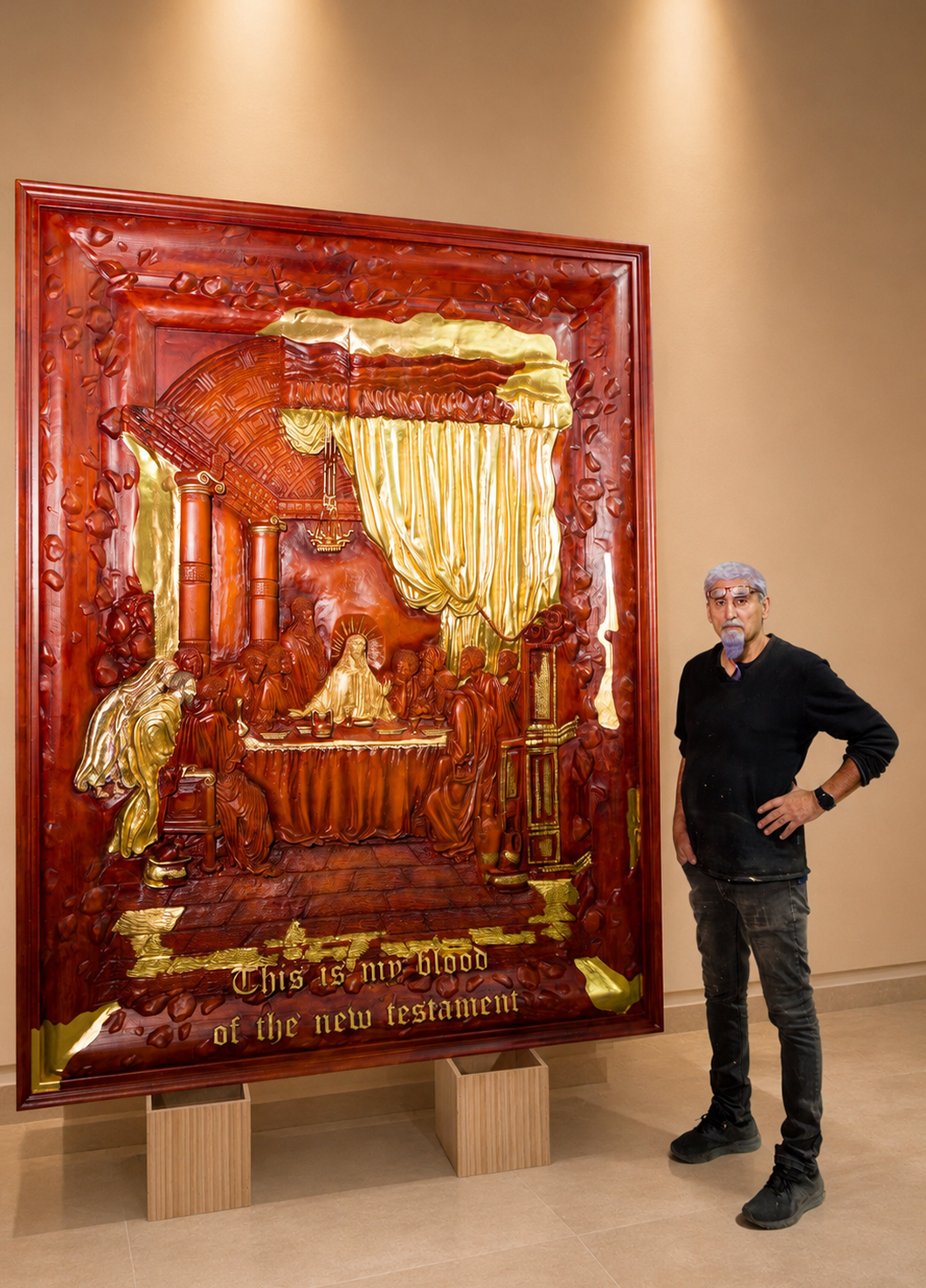
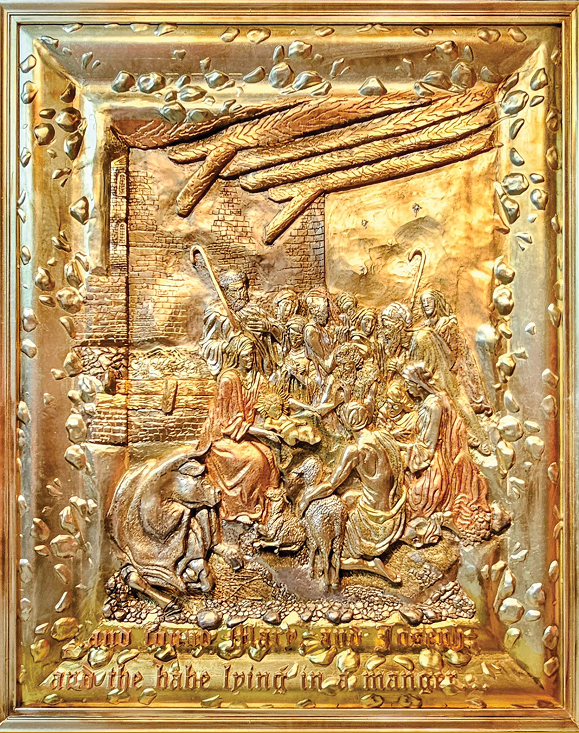
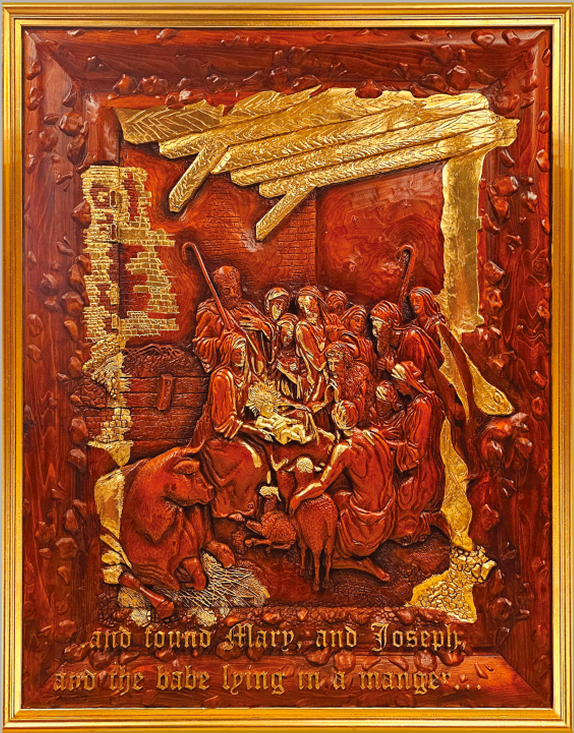
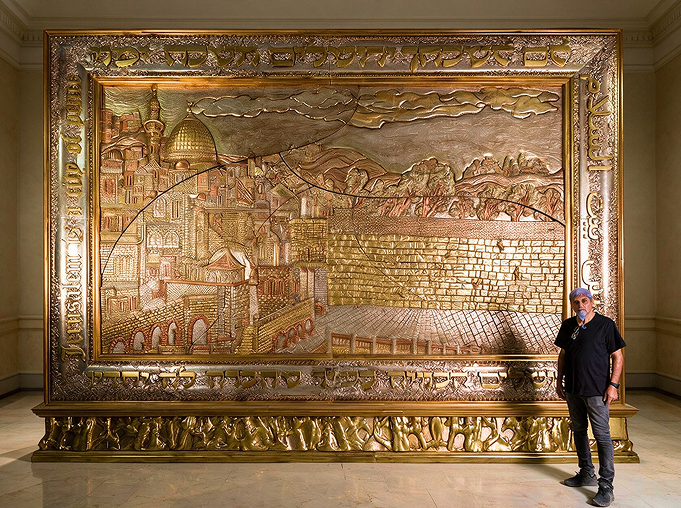
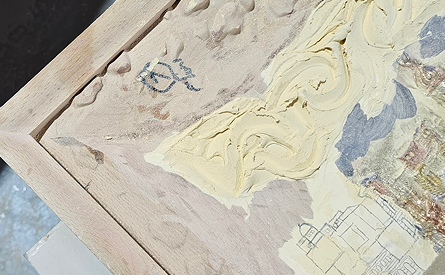
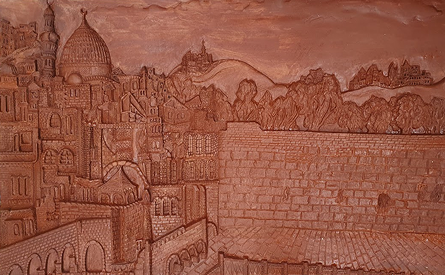
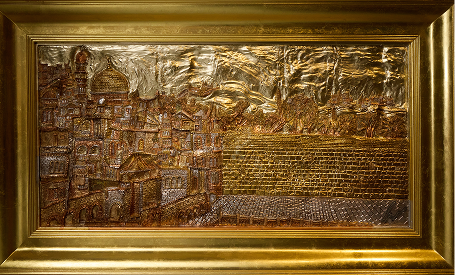
Amnon Moalem is an Israeli artist whose works exist at the intersection of faith, history, and physical mastery. Carving directly into solid wood, casting in epoxy, and finishing by hand with gold, silver, and copper metallic leaves, his pieces do not merely depict their subjects. They embody them.
Working on a monumental scale, many pieces exceeding two meters in height, Amnon’s art is made for spaces that carry meaning: grand private residences, institutions, places of worship, and distinguished collections.
“The spirits of artists past lend me their form, and I, in present, repay them in love and beauty in my inevitable journey toward eternity”
“The spirits of artists past lend me their form, and I, in present, repay them in love and beauty in my inevitable journey toward eternity”
Amnon Moalem
SERIES
2019–2025
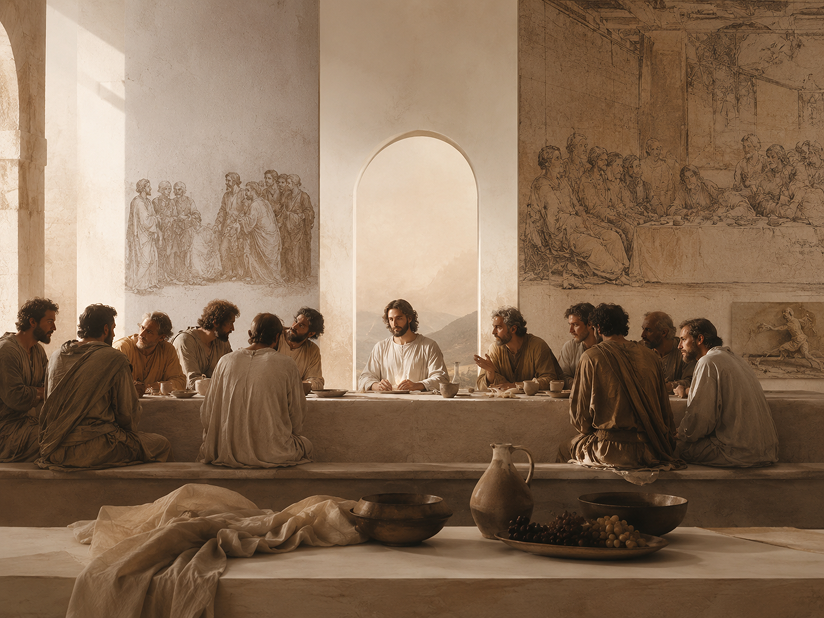
The New Testament Series
Twelve monumental works, carved wood, gold leaf, and cast-epoxy, depicting the defining moments of the New Testament. After Leonardo da Vinci and Gustave Doré.
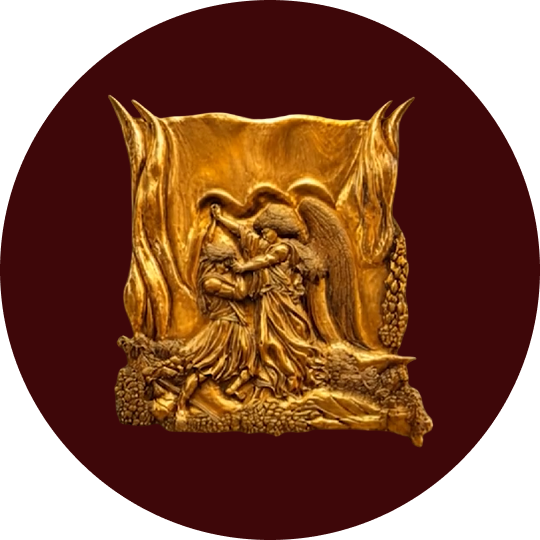
Fifteen landmark works bringing the stories of the Hebrew Bible to monumental scale. Carved in wood, clad in gold, silver, and copper. Each a lifetime of devotion made visible.
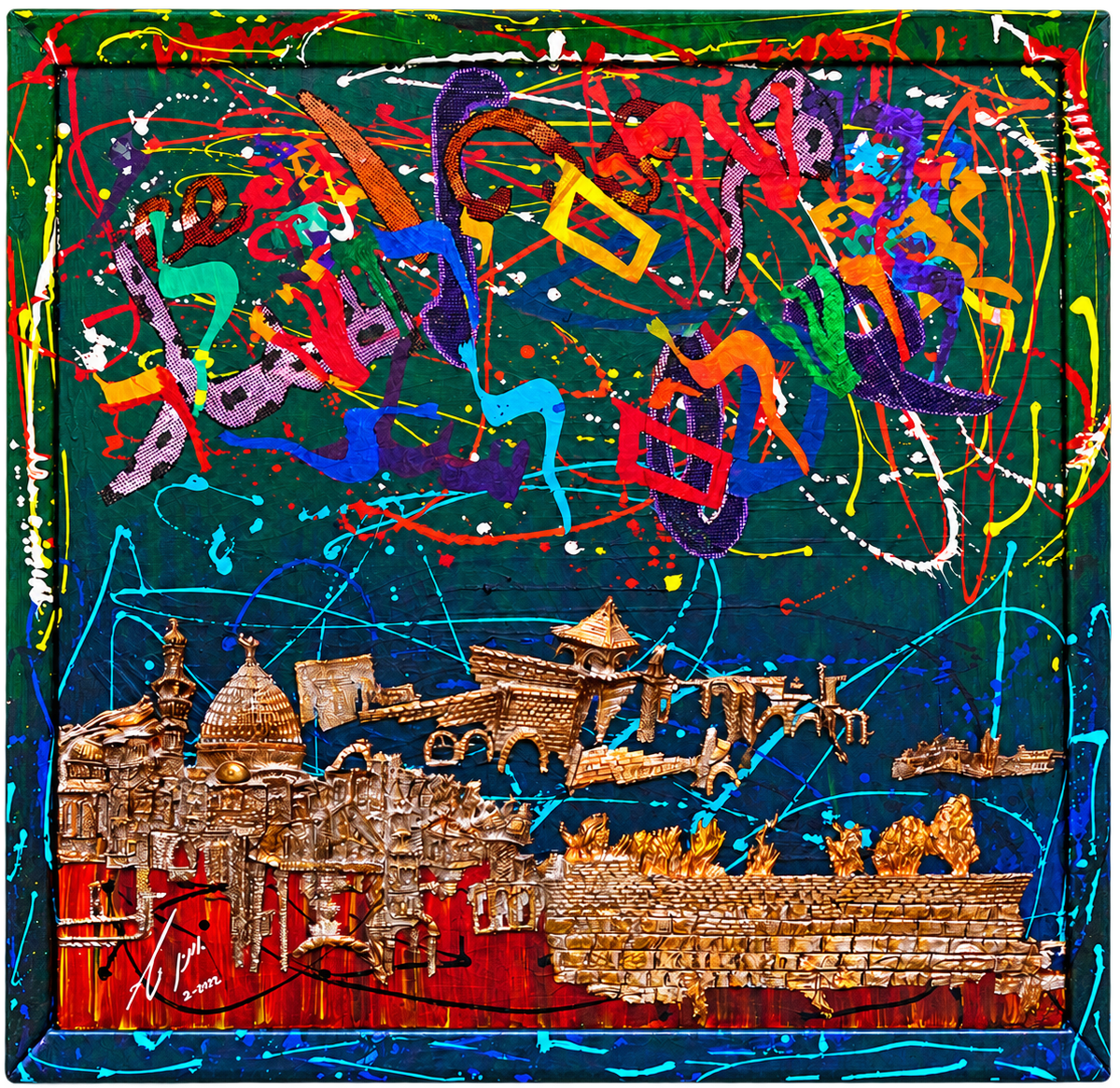
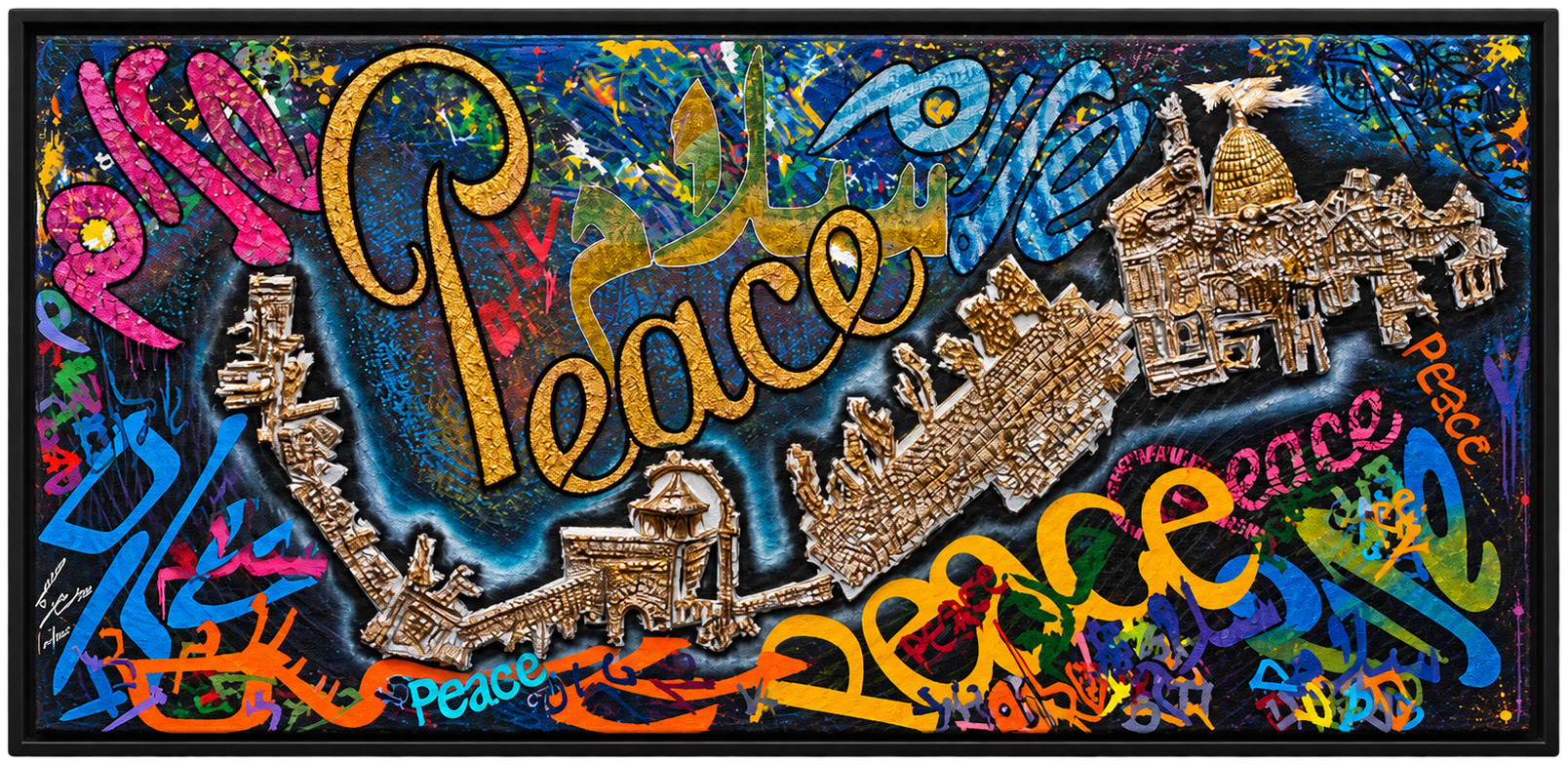
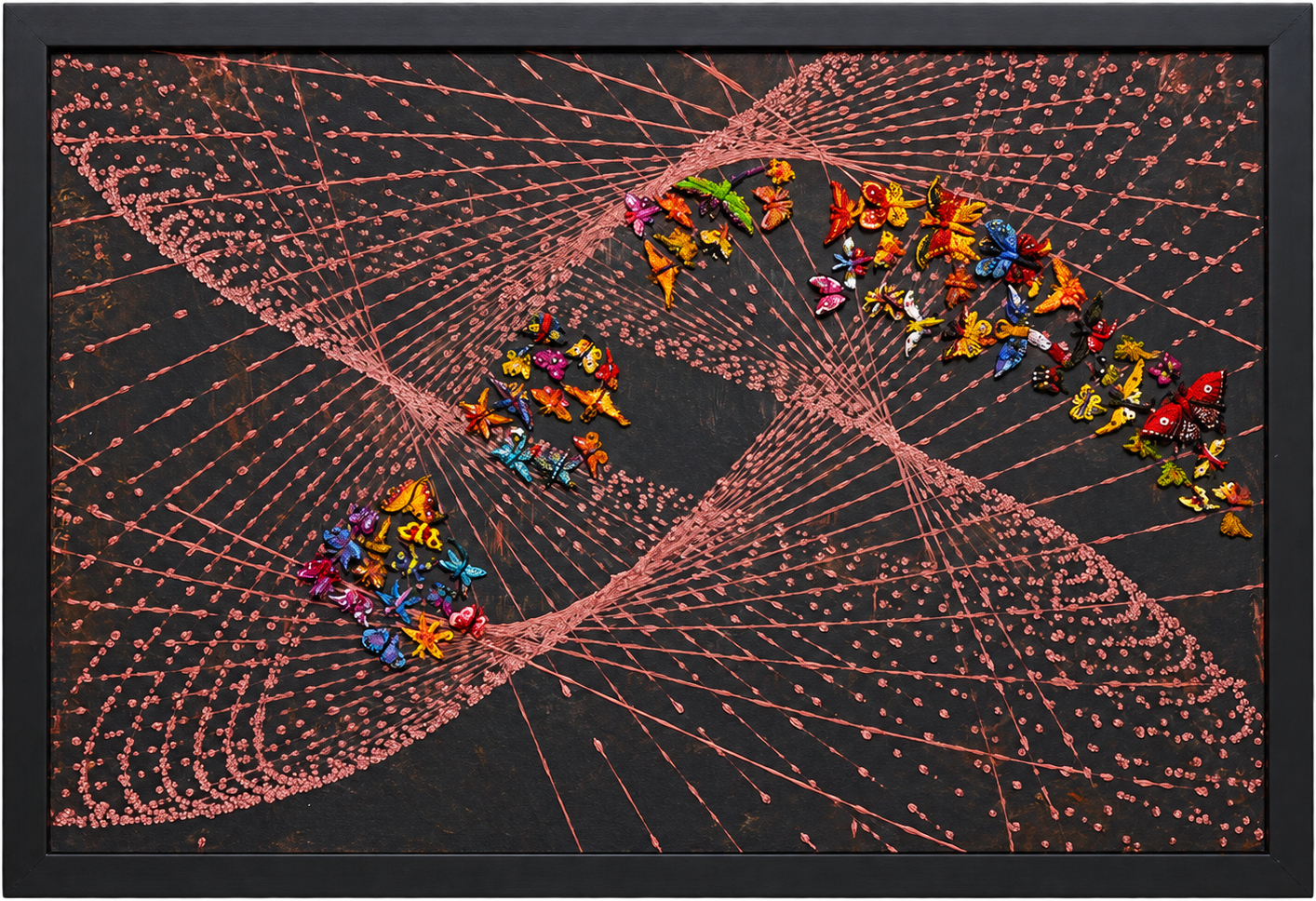
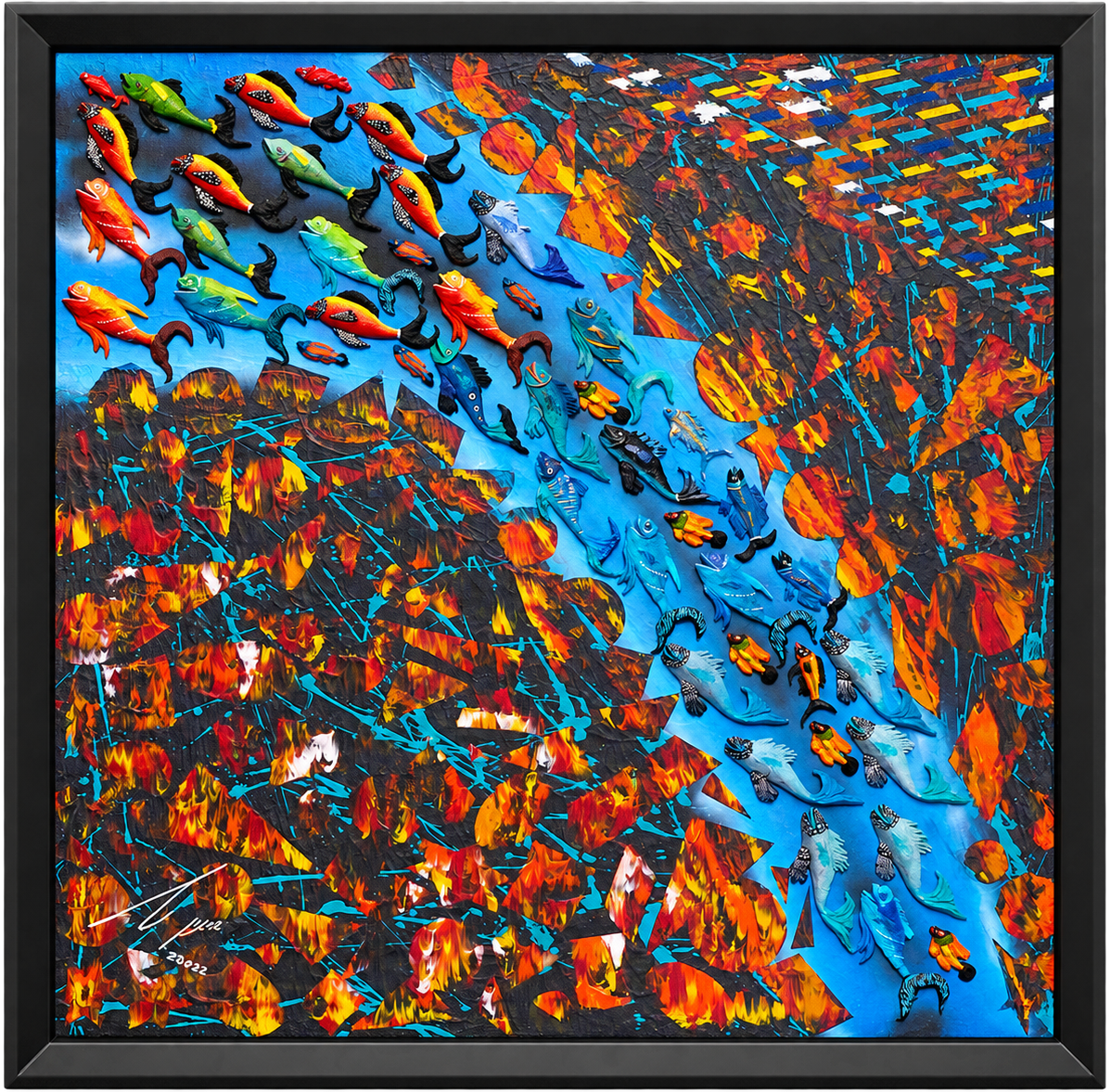
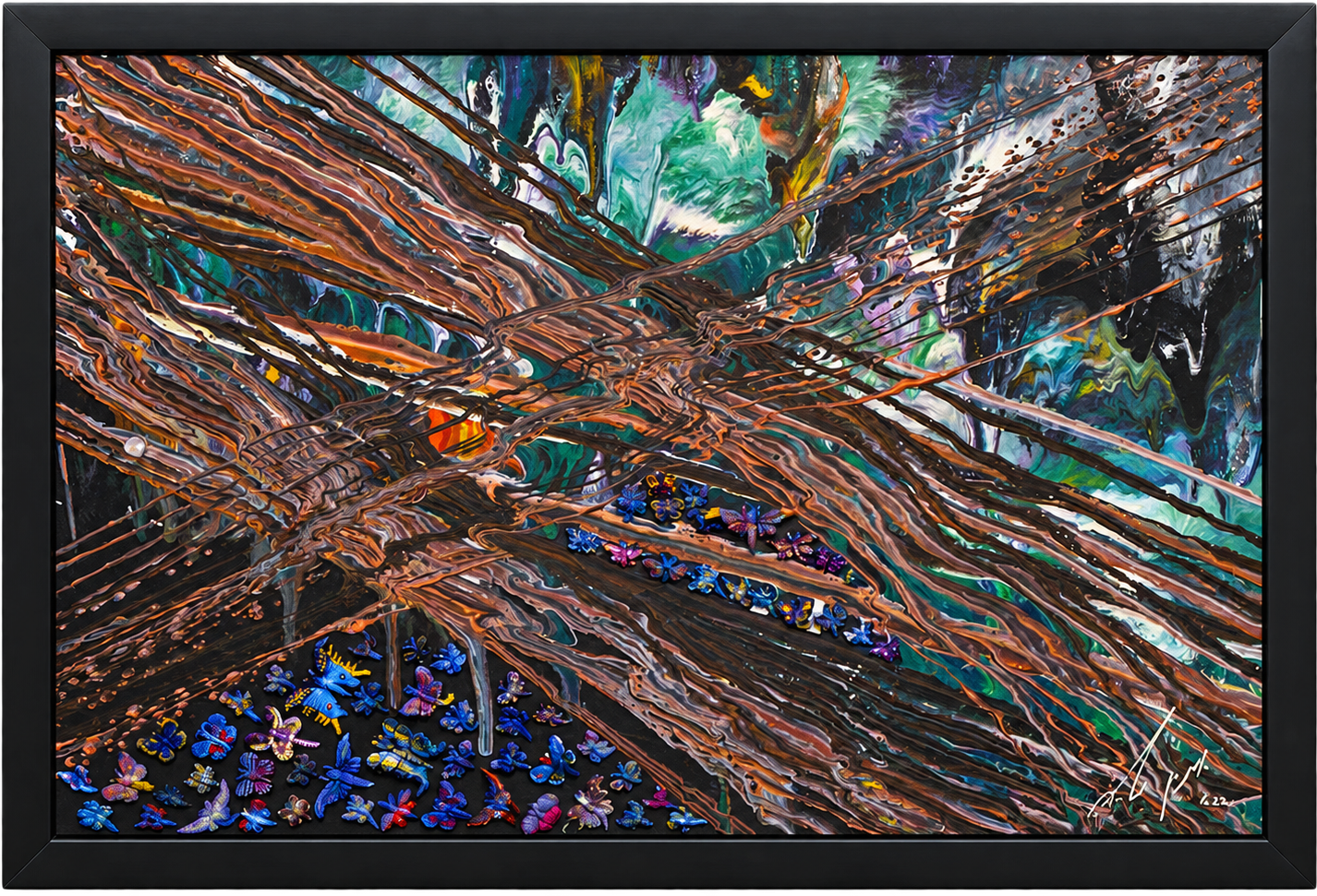
These works represent a different dimension of Amnon's practice: paintings, collages, and conceptual pieces that explore the same themes of time, identity, spiritual encounter, and the nature of…
These works represent a different dimension of Amnon's practice: paintings, collages, and conceptual pieces that explore the same themes of time, identity, spiritual encounter, and the nature of…
These works represent a different dimension of Amnon's practice: paintings, collages, and conceptual pieces that explore the same themes of time, identity, spiritual encounter, and the nature of…
These works represent a different dimension of Amnon's practice: paintings, collages, and conceptual pieces that explore the same themes of time, identity, spiritual encounter, and the nature of…
These works represent a different dimension of Amnon's practice: paintings, collages, and conceptual pieces that explore the same themes of time, identity, spiritual encounter, and the nature of…